

È stata davvero una bella sfida arrivare alla fine di un romanzo così lungo e ricco di suggestioni, fino alla sorprendente conclusione, attraverso passaggi talora esaltanti talora ridondanti.
Incipit
“When Caroline Meeber boarded the afternoon train for Chicago, her total outfit consisted of a small trunk, a cheap imitation alligator-skin satchel, a small lunch in a paper box, and a yellow leather snap purse, containing her ticket, a scrap of paper with her sister’s address in Van Buren Street, and four dollars in money. It was in August, 1889. She was eighteen years of age, bright, timid, and full of the illusions of ignorance and youth.”
Trama
Caroline Meeber, familiarmente Sister Carrie, diciottenne piena di sogni e aspettative lascia Columbia City e la sua famiglia per raggiungere sua sorella Mollie, sposata a Chicago. Dal lì inizierà il suo percorso di ricerca di un lavoro e di costruzione della sua identità di donna autonoma. A Chicago vive la sua prima esperienza di lavoro in una fabbrica di scarpe nella terribile atmosfera della catena di montaggio.
Dopo un breve e tormentato soggiorno presso la sorella, Carrie decide di andarsene e di cercare un lavoro che le permetta di vivere autonomamente in città. Incontra gli uomini che determineranno in parte il suo destino, Drouet e Hurstwood. Il primo, già conosciuto sul treno per Chicago, le apre “il sipario” del Teatro, che diverrà in seguito la sua professione; Hurstwood la catturerà per la sua esperienza, gentilezza e magnificenza, sebbene la spinga poi a seguirlo con l’inganno. Entrambi usciranno dalla sua vita nel momento in cui Carrie realizzerà che può farcela da sola, almeno economicamente. Ma non tutto va per il verso che la giovane Sister Carrie si era immaginata al momento di lasciare Columbia City.
Titolo

Il titolo del romanzo ha una sua storia. Per l’editore Sister Carrie avrebbe dovuto essere The Flesh and Spirit, per conferire al libro una veste di accettabilità “morale”, considerato che la storia suscitò grande indignazione nei benpensanti dell’epoca. Ma l’operazione non riesce. Dreiser insiste per il titolo da lui scelto. La parola “sorella” potrebbe indurre qualche lettore a pensare che sia la storia di una suora, ma si scoprirà subito il vero significato del termine: in famiglia Carrie veniva affettuosamente chiamata così. Il termine ritorna in una differente accezione quando Carrie accetta l’aiuto di Drouet a Chicago, a voi individuarla…
Carrie
“Caroline, or Sister Carrie, as she had been half affectionately termed by the family, was possessed of a mind rudimentary in its power of observation and analysis. Self-interest with her was high, but not strong. It was, nevertheless, her guiding characteristic. Warm with the fancies of youth, pretty with the insipid prettiness of the formative period, possessed of a figure promising eventual shapeliness and an eye alight with certain native intelligence, she was a fair example of the middle American class — two generations removed from the emigrant. Books were beyond her interest — knowledge a sealed book.”
Drouet
Sul treno per Chicago, il primo incontro con Drouet. Carrie ne è impressionata, si scambiano gli indirizzi. Chissà potranno rivedersi a Chicago…
“His suit was of a striped and crossed pattern of brown wool, new at that time, but since become familiar as a business suit. The low crotch of the vest revealed a stiff shirt bosom of white and pink stripes. From his coat sleeves protruded a pair of linen cuffs of the same pattern, fastened with large, gold plate buttons, set with the common yellow agates known as “cat’s-eyes.” His fingers bore several rings — one, the ever-enduring heavy seal — and from his vest dangled a neat gold watch chain, from which was suspended the secret insignia of the Order of Elks. The whole suit was rather tight-fitting, and was finished off with heavy-soled tan shoes, highly polished, and the grey fedora hat.”
Hurstwood
Hurstwood rappresenta in linea di massima l’uomo di potere che pretende troppo dalla sua presunta grandezza, e si ritrova dentro un abisso senza fine.
“Hurstwood was an interesting character after his kind. He was shrewd and clever in many little things, and capable of creating a good impression. His managerial position was fairly important […]The chief executive and financial functions devolved upon the owners — Messrs. Fitzgerald and Moy — and upon a cashier who looked after the money taken in. For the most part he lounged about, dressed in excellent tailored suits of imported goods, a solitaire ring, a fine blue diamond in his tie, a striking vest of some new pattern, and a watch-chain of solid gold, which held a charm of rich design, and a watch of the latest make and engraving. He knew by name, and could greet personally with a “Well, old fellow,” hundreds of actors, merchants, politicians, and the general run of successful characters about town, and it was part of his success to do so.”
I luoghi
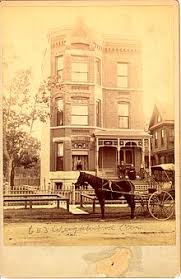
Molto interessanti sono i luoghi della storia: Chicago, emergente città industriale e New York megalopoli, regno delle opportunità, dove l’arte fiorisce e l’apertura mentale domina. Dove una ragazza semplice riesce a fare carriera dall’anonimato del Chorus line di un musical alla fama di attrice di qualità.
In queste città la modernità si sta facendo strada prepotentemente, ma esige allo stesso tempo un pedaggio salato che Dreiser analizza in dettaglio, dalla catena di montaggio allo sfruttamento dei lavoratori, specialmente delle donne, alla crisi economica che travolge tutti inaspettatamente, anche se Hurstwood l’aveva sentita arrivare…

A New York anche le differenze tra ricchi e poveri sono abissali, Ma la grande megalopoli sa inventarsi soluzioni creative ai problemi dei disperati, compare infatti il misterioso Capitano che riesce a procurare un tetto per la notte alla fila infinita di poveri intirizziti.
Hurstwood a New York
Hurstwood, caduto in disgrazia, scopre e vive in prima persona questa nuova realtà, tra i ghetti di Hester Street e Bowery, Tenta disperatamente di reagire, il suo mantra è: I’ve got to get something… ma di fatto la sua discesa agli inferi sociali è irreversibile. A molti il romanzo è piaciuto soprattutto per la sua parabola umana.
“Il dramma del compagno d’avventura di Carrie, che scende tutti i gradini del disastro sociale, fino alla fame vera e dura, fino alle notti nei dormitori dei miserabili, fino alla morte per disperazione e per gas in una stamberga della Bowery. Mentre nella sua stanza al Waldorf da poco costruito (e abbattuto poi e ricostruito come Empire State Building) Carrie, ormai attrice di successo con il nome d’arte di Carrie Madenda, su consiglio di un nuovo, fascinoso corteggiatore, legge Père Goriot di Balzac, al caldo, crogiolandosi nel suo benessere, dimentica della larva d’uomo – Hurstwood, il suo amante, l’uomo sofisticato, colto e debole che si è rovinato per lei – che si è presentato all’entrée des artistes del suo teatro implorando neanche più l’amore, ma qualche centesimo per mangiare e dormire nel gelido inverno newyorchese, prima di un finale che lascia sgomenti.Repubblica.it 2014”
Associazioni
Immediata scatta nella mia mente l’associazione a Tess di Thomas Hardy. Per molti versi Carrie e Tess si assomigliano, Dreiser e Hardy assumono infatti un comune punto di vista naturalistico e realista. I due mondi presentano delle somiglianze anche se le storie si svolgono una in Inghilterra e l’altra in America. La conclusione delle due vicende è diversa, meno melodrammatica quella di Carrie, più orientata ad un realismo sconfortante e fatale quella di Tess.
“Though Dreiser has been criticized for his writing style and lack of formal education, Sister Carrie remains an influential example of naturalism and realism. While it initially did not sell well (fewer than 500 copies) and encountered censorship, it is now considered one of the great American urban novels, which explores the gritty details of human nature, as well as how the process of industrialization affected the American people.
I traguardi di Carrie
Carrie impressiona per la sua ingenuità da una parte e per la sua capacità di arrivare a decisioni importanti dall’altra, nonostante il suo mantra “non so” dia l’apparente sensazione di una creatura indecisa e senza strumenti.
E invece no, Carrie possiede gli strumenti: osserva, rielabora, dubita, e decide. Decide di continuare la sua ricerca della felicità terrena, materiale, fatta di bellezza, ricchezza e riconoscimenti. Ma alla fine della strada il suo mantra torna ad occuparle la mente: “non so…” Circolarità dell’esistenza.
“Oh, the tangle of human life! How dimly as yet we see. Here was Carrie, in the beginning poor, unsophisticated. emotional; responding with desire to everything most lovely in life, yet finding herself turned as by a wall….”
“She had learned that in his world, as in her own present state, was not happiness.”
Dreiser in TV e al cinema
Scopro che Dreiser è l’autore di Una tragedia americana, e mi torna subito in mente il meraviglioso sceneggiato RAI del 1962 con un cast stellare di attori di teatro, con Warner Bentivegna nel ruolo di Clyde.

Sempre da questo romanzo viene tratto il famoso film Un posto al sole (di George Stevens, 1951), con un maestoso Montgomery Cliff nei panni di Clyde
E ovviamente anche Sister Carrie diventa film: Sister Carrie (Gli occhi che non sorrisero in versione Italiana)
Tutta un’altra storia rispetto al romanzo! Ma considerato il periodo in cui fu scritto aiuta a farsi un’idea del contenuto.
Assaggi
Chicago-The sound of the hammer engaged upon the erection of new structures was everywhere heard. Great industries were moving in.
Carrie cerca lavoro- She walked bravely forward, led by an honest desire to find employment and delayed at every step by the interest of the unfolding scene, and a sense of helplessness amid so much evidence of power and force which she did not understand. These vast buildings, what were they? These strange energies and huge interests, for what purposes were they there?
Carrie alla catena di montaggio- She felt the need of a breath of fresh air and a drink of water, but did not venture to stir. The stool she sat on was without a back or foot-rest, and she began to feel uncomfortable. She found, after a time, that her back was beginning to ache. She twisted and turned from one position to another slightly different, but it did not ease her for long.
Il fascino del grande magazzino There was nothing there which she could not have used — nothing which she did not long to own. The dainty slippers and stockings, the delicately frilled skirts and petticoats, the laces, ribbons, hair-combs, purses, all touched her with individual desire, and she felt keenly the fact that not any of these things were in the range of her purchase. She was a work-seeker, an outcast without employment, one whom the average employee could tell at a glance was poor and in need of a situation.
Mistica della famiglia-Once in a while he would meet a woman whose youth, sprightliness, and humour would make his wife seem rather deficient by contrast, but the temporary dissatisfaction which such an encounter might arouse would be counterbalanced by his social position and a certain matter of policy. He could not complicate his home life, because it might affect his relations with his employers. They wanted no scandals. A man, to hold his position, must have a dignified manner, a clean record, a respectable home anchorage. Therefore he was circumspect in all he did,
Regole sociali-devi non devi- Society possesses a conventional standard whereby it judges all things. All men should be good, all women virtuous. Wherefore, villain, hast thou failed? For all the
La fredda mano dell’inverno- how firmly the chill hand of winter lays upon the heart; how dispiriting are the days during which the sun withholds a portion of our allowance of light and warmth. We are more dependent upon these things than is often thought. We are insects produced by heat, and pass without it.
Il cuore ascolta- People in general attach too much importance to words. They are under the illusion that talking effects great results. As a matter of fact, words are, as a rule, the shallowest portion of all the argument. They but dimly represent the great surging feelings and desires which lie behind. When the distraction of the tongue is removed, the heart listens
La vendetta della moglie tradita- Mrs Hurstwood- She really did not care whether he came home any more or not. The household would move along much more pleasantly without him, and she could do as she wished without consulting any one. Now she proposed to consult a lawyer and hire a detective. She would find out at once just what advantages she could gain.
Carrie e Hurstwood arrivano a New York- Grand Central Station!” called the trainman, as, after a few minutes of darkness and smoke, daylight reappeared.
I rimpianti di Hurstwood-He began to see as one sees a city with a wall about it. Men were posted at the gates. You could not get in. Those inside did not care to come out to see who you were. They were so merry inside there that all those outside were forgotten, and he was on the outside.
Scioperi, crumiri e poliziotti combattuti- His face was a very neutral thing to contemplate. In his heart of hearts, he sympathised with the strikers and hated this “scab.” In his heart of hearts, also, he felt the dignity and use of the police force, which commanded order. Of its true social significance, he never once dreamed. His was not the mind for that. The two feelings blended in him — neutralised one another and him. He would have fought for this man as determinedly as for himself, and yet only so far as commanded. Strip him of his uniform, and he would have soon picked his side.
Carrie ha paura di lasciare Hurstwood -She thought of leaving Hurstwood and thus making him act for himself, but he had developed such peculiar traits she feared he might resist any effort to throw him off. He might hunt her out at the show and hound her in that way. She did not wholly believe that he would, but he might. This, she knew, would be an embarrassing thing if he made himself conspicuous in any way. It troubled her greatly.
Carrie riceve il primo vero salario da attrice- It was paid to her in greenbacks — three twenties, six tens, and six fives. Thus collected it made a very convenient roll. It was accompanied by a smile and a salutation from the cashier who paid it. “Ah, yes,” said the latter, when she applied; “Miss Madenda — one hundred and fifty dollars. Quite a success the show seems to have made.” “Yes, indeed,” returned Carrie. Right after came one of the insignificant members of the company, and she heard the changed tone of address.
Falsità del successo…Carrie cambia prospettiva-Hence, she drew near these things. Chicago, New York; Drouet, Hurstwood; the world of fashion and the world of stage — these were but incidents. Not them, but that which they represented, she longed for. Time proved the representation false.
Fragilità umana: Oh Carrie, Carrie- In your rocking-chair, by your window dreaming, shall you long, alone. In your rocking-char, by your window, shall you dream such happiness as you may never feel.
